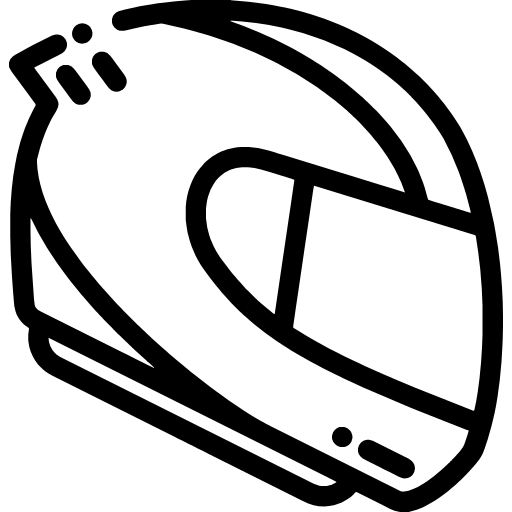

Full-Face Helmet

A full-face helmet covers the whole head with an integral chin bar and visor, offering the most crash and weather protection.

A full-face helmet has a one-piece shell with a built-in chin bar and a visor. It protects the head, face and jaw – the chin area is one of the most frequently hit zones in crashes – and also gives the best protection from wind, cold, noise and rain.

Variants include sport, touring and adventure full-faces (with a peak), and motocross helmets, which have an extended chin bar and peak and are worn with goggles. Modular (flip-up) helmets are similar, but the hinged chin bar is a compromise in strength.

In Europe, choose a helmet with ECE 22.06 approval. Fit is critical: it should sit snugly without pressure points and not roll off when you pull it from the back. Replace a helmet after a significant impact and, as a rule of thumb, every five years or so, as the liner ages.

Related terms

← All terms